There's a national pizza chain whose slogan is, "Better Ingredients. Better Pizza." Whether they actually use better ingredients is true or not, I can't say.
What I can say is that I've become a firm believer that better ingredients almost always lead to better food.
Whether it's vegetables from the garden, fresh herbs instead of dried, real butter instead of margarine, or taking the time to make something from scratch, those little decisions add up. The food usually tastes better, and more often than not, it's better for you too.
So when my birthday rolled around last week and my family asked what I wanted, I had an unusual request.
A pasta maker.
I've always enjoyed walking into an Italian restaurant and seeing fresh pasta being made in-house. There's something satisfying about taking a few simple ingredients and turning them into something completely different.
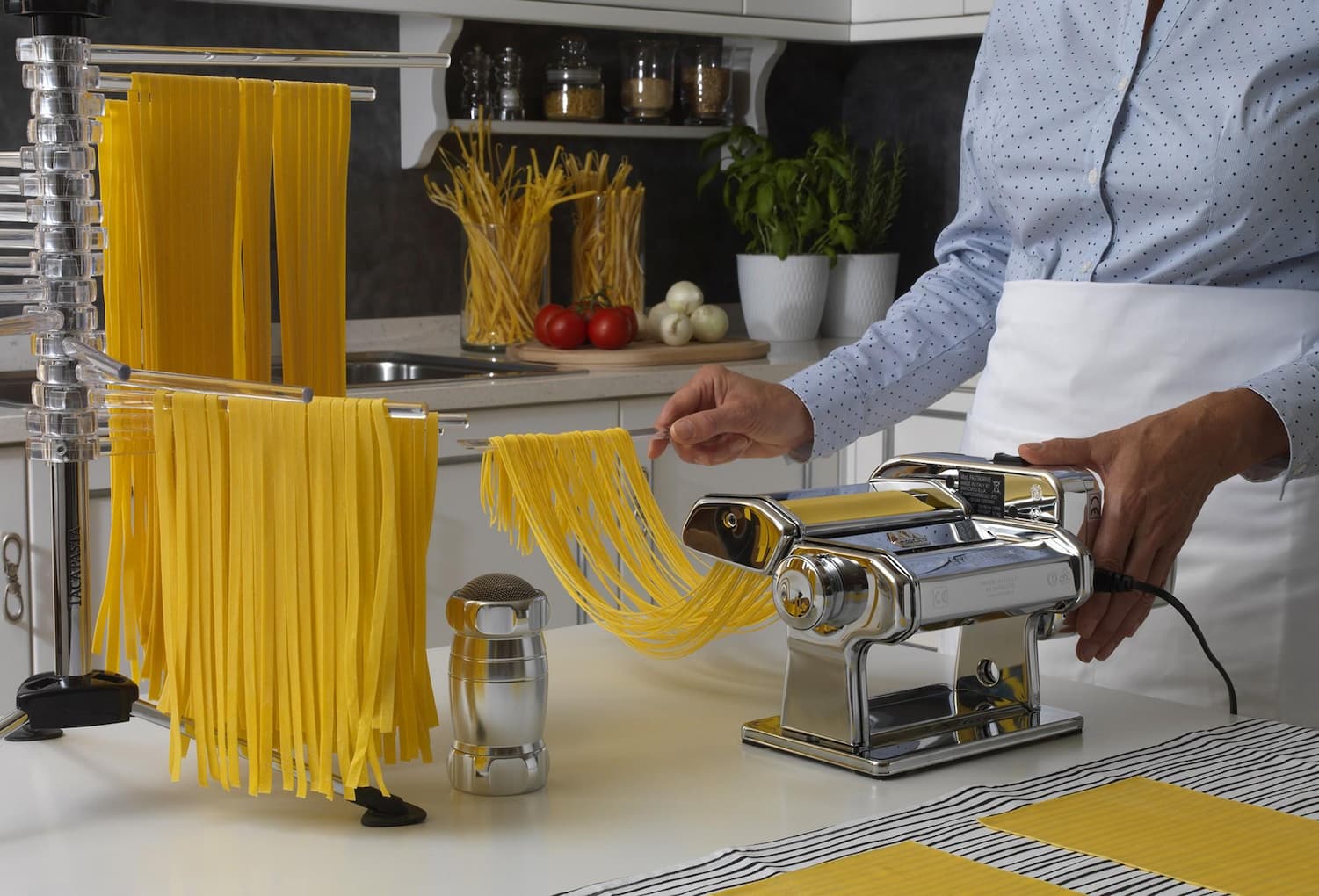
My family came through with a Marcato Atlasmotor, made in Italy, and naturally I couldn't wait to try it out.
I'll admit, I spent way too much time worrying about the wrong things. Was I mixing the dough correctly? Had I kneaded it enough? Had I kneaded it too much? Was I going to ruin it running it through the pasta machine?
As it turns out, none of those were my biggest problem.
I ended up with four beautiful sheets of pasta, fed them through the fettuccine cutter, dusted the noodles with semolina, formed them into little nests, and dropped them into the boiling water.
It wasn't until I tried to pull them back out that I realized my mistake.
I had never thought to cut the pasta sheets in half before feeding them through the cutter.
Every strand of fettuccine was nearly three feet long.
Dinner quickly turned into a lesson in twirling pasta. My family thought it was hilarious, and honestly, so did I. The good news is that it tasted fantastic. The next batch was just a little shorter.
The surprising part was just how simple the dough itself was.
Just flour. Eggs. A little patience.
I settled on a blend of 90% Tipo 00 flour and 10% fine semolina, using 300 grams of flour and 3 eggs. It's easy to remember: 100 grams of flour for every egg. The 00 flour gives the pasta its silky texture, while the semolina adds just enough bite and helps the noodles hold their shape.
And don't let the pasta maker fool you into thinking you need special equipment. People were making fresh pasta for centuries before someone invented a roller. A rolling pin works just fine. Roll the dough until it's about 1/16-inch thick—thin enough that you can just begin to see the outline of your hand through it. Dust it lightly with flour, fold the sheet over itself three or four times, then slice it into ¼-inch strips. Unfold the noodles, dust them with a little semolina, and you're ready to cook.
For its first outing, I paired the fresh fettuccine with blackened salmon and the Alfredo sauce from the Crispy Chicken Fettuccine recipe I shared a few weeks ago.
Let's just say it won't be the last time I make pasta from scratch.
Sometimes the best kitchen gadgets aren't about making things faster.
They're about making them better.
Homemade Fresh Fettuccine
Serves: 4
Ingredients
270 g Tipo 00 flour
30 g fine semolina flour
3 large eggs
Instructions
Combine the Tipo 00 flour and semolina on a clean work surface or in the bowl of a stand mixer.
Make a well in the center and add the eggs.
Mix until a shaggy dough forms, then knead for 8–10 minutes (or about 7 minutes with a dough hook) until smooth and elastic.
Wrap tightly and let the dough rest at room temperature for at least 30 minutes.
Divide the dough into three equal pieces.
Using a pasta machine: Feed each piece through the rollers, reducing the thickness one setting at a time until the sheet is about 1/16-inch thick (roughly 1.5–2 mm). If you're making long noodles like fettuccine, cut each sheet in half before feeding it through the cutter...unless you're hoping to recreate my three-foot noodle experiment. Then run the dough through the fettuccine cutter.
Without a pasta machine: Roll the dough with a rolling pin until it's about 1/16-inch thick—thin enough that you can just begin to see the outline of your hand through it. Lightly dust the sheet with flour, loosely fold it over itself three or four times, then slice into ¼-inch-wide strips. Gently unfold the noodles.
Dust the noodles lightly with semolina and let them rest for 10–15 minutes.
Cook in heavily salted boiling water for 2–3 minutes, then transfer directly to your favorite sauce.
A Few Notes
The 100 grams of flour per egg ratio makes it easy to scale the recipe up or down.
The 90% Tipo 00 / 10% semolina blend gives the pasta a silky texture with just enough bite to hold sauces beautifully.
Fresh pasta cooks much faster than dried pasta, so don't walk away from the pot.
A light dusting of semolina keeps the noodles from sticking together before cooking.
If you've never made fresh pasta before, don't be intimidated. After one batch, you'll wonder why you waited so long.








Leave a comment